Starting a Mushroom FPO in Uttar Pradesh: What the Paperwork Actually Involves
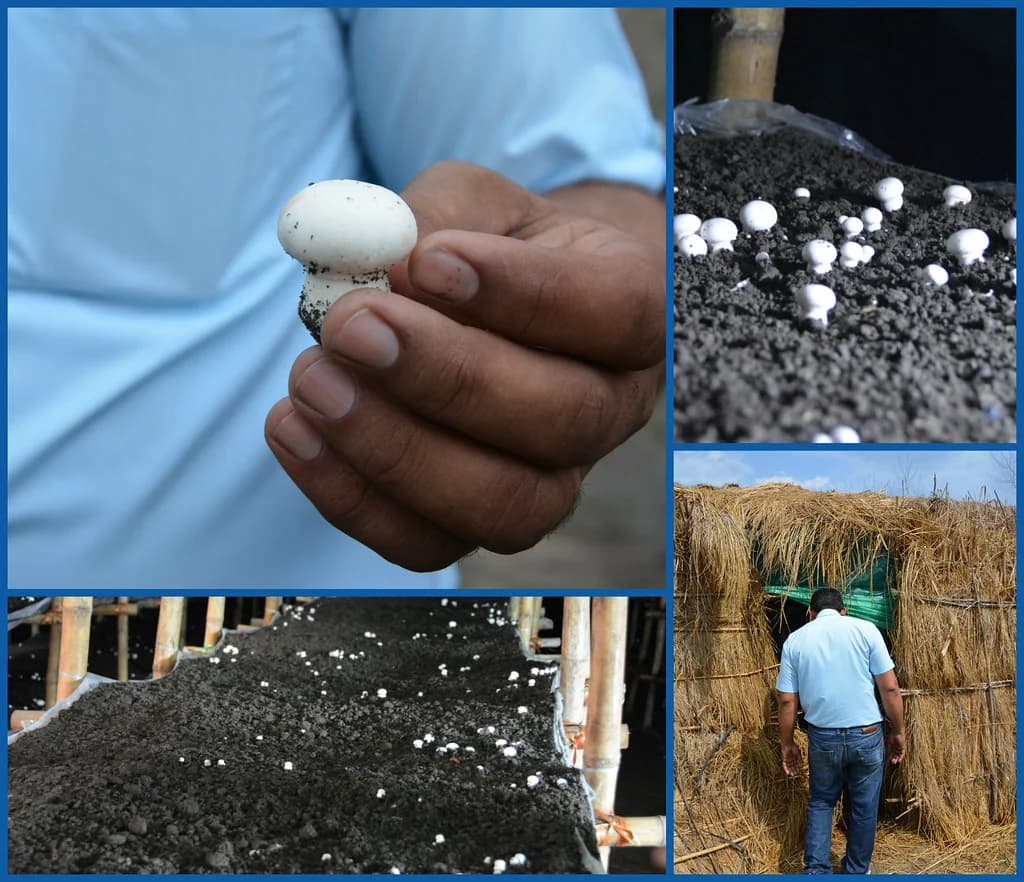
Every few weeks, someone from a farming background in Uttar Pradesh asks us some version of the same question: a group of us grow mushrooms, or want to, individually and at small scale; should we form an FPO, and what does that actually involve? It's a good question, and the honest answer is that "FPO" gets used loosely enough in conversation that a lot of people asking don't yet know what distinguishes it from a cooperative or an informal farmers' group. Here's the primer we'd give in a consultation, in plain terms.
What an FPO actually is
A Farmer Producer Organisation is a registered legal entity, typically incorporated as a company under the Companies Act (specifically as a Producer Company) or sometimes as a cooperative, owned and controlled by its farmer-members. The core idea is aggregation: individual smallholder farmers, each too small to negotiate meaningfully with input suppliers or bulk buyers on their own, pool together under one legal structure that can buy inputs in bulk, access institutional credit, process or grade produce collectively, and sell at volumes that actually interest larger buyers.
It's worth distinguishing an FPO from the broader category of farmer collectives it sits within, because the terminology gets used interchangeably and shouldn't be. Farmers' groups, Farmer Interest Groups (FIGs), Common Interest Groups (CIGs), cooperatives, farmers' associations, federations, Self-Help Groups (SHGs) and farmers' unions are all related but structurally distinct forms of collective organisation. An FPO specifically is a formally incorporated producer company: closer in legal structure to a private company than an informal association, which is precisely what allows it to enter contracts, take loans and hold assets in its own name rather than depending on individual member liability.
Who actually supports FPO formation
This isn't a process you have to figure out entirely on your own, and knowing which bodies exist to help changes how daunting it looks. The institutional support ecosystem for FPOs in India includes the Small Farmers' Agribusiness Consortium (SFAC) under the Ministry of Agriculture and Farmers' Welfare, the National Cooperative Development Corporation, NABARD (which plays a significant role in FPO financing and capacity building), the National Agricultural Cooperative Marketing Federation, regional agricultural marketing corporations, and various state agriculture departments (Uttar Pradesh's included), alongside NGOs that specialise in rural value chain development. Several of these bodies run active FPO promotion schemes with defined support packages, not just informational guidance, and part of what we help with in a consultation is identifying which specific scheme or support body fits a given group's situation, rather than treating "go talk to the government" as sufficient advice.
Why mushrooms specifically suit the FPO model
Mushroom cultivation has a structural advantage for FPO-style aggregation that field crops often don't: low individual capital requirement combined with a genuine need for collective market access. A single smallholder can run a modest oyster mushroom bag-culture setup, the kind of unit that needs 50kg of substrate and a few kilos of spawn to start, using agricultural waste (paddy straw, in UP's case, is abundant and cheap) they likely already have access to. What that individual grower can't easily do alone is negotiate consistent buyer relationships, access processing equipment for drying or value-addition, or reach markets beyond their immediate locality. An FPO structure lets a group of such growers pool harvest into volumes that interest a processor or a wider market, exactly the kind of hub-and-spoke model that mushroom marketing training specifically recommends over dozens of individual growers each trying to sell small quantities independently.
What we actually help with
Our consultation work in this area covers a few distinct pieces, and we try to be clear about which is which so nobody comes away thinking we're offering legal services we're not licensed to provide:
Variety and unit planning, grounded in our ICAR-DMR training, which mushroom species suits the group's climate and available substrate, realistic yield and cost expectations at the scale being considered, and common early mistakes (wrong strain for the local climate is one of the most frequent).
Understanding the FPO landscape: explaining the difference between an FPO, a cooperative and an informal group, which support bodies exist, and pointing groups toward the right registration and scheme pathway for their situation, in coordination with the formal registration process itself, which typically involves state agriculture department or SFAC-affiliated resource institutions.
Market linkage thinking: helping a group plan not just how to grow, but how what they grow reaches a buyer, including whether some processing or value-addition (drying, powder production) makes more economic sense than selling only fresh, perishable stock.
A practical starting point, not a shortcut
If you're a group of growers in Uttar Pradesh considering this path, the realistic first step isn't registering anything: it's getting honest about scale and commitment. An FPO is a meaningful structural commitment involving governance, shared decision-making and ongoing compliance, not a one-time paperwork exercise. The groups we've seen succeed are the ones who start with a clear-eyed view of what they're growing, who they're selling to, and how many members are genuinely committed before formalising the structure: not the ones who register first and figure out the business plan afterward.
If that's roughly where you are, that's exactly the conversation our business support consultations are set up to have.
The difference between an FPO and simply forming a cooperative
Since the terms get used almost interchangeably in casual conversation, it's worth being explicit about why a group might choose one structure over the other. A traditional cooperative society, registered under state cooperative laws, has a long history in Indian agriculture and a governance model built around member democracy: one member, one vote, regardless of shareholding. An FPO structured as a Producer Company, by contrast, operates more like a private limited company in its governance and compliance obligations, but restricts share ownership and control specifically to producer-members (in this case, mushroom growers), rather than allowing outside investors to take a controlling stake. For many groups, the FPO route has become more attractive in the last decade specifically because of the scale of institutional support now channelled through it: NABARD-backed FPO promotion schemes, SFAC cluster-based business organisation programmes, and dedicated central government FPO formation targets have made the FPO route better resourced with handholding support than a standalone cooperative registration typically receives today, even though both remain legally valid structures.
Realistic timelines and what actually slows groups down
Groups considering this path often underestimate how long formation genuinely takes when done properly: realistically, several months from initial group formation to a functioning, registered Producer Company with its founding documentation, board structure and initial capital in place, not counting the time needed afterward to actually get a mushroom unit or shared processing facility operational. The steps that most commonly cause delay aren't the legal registration paperwork itself, which is fairly standardised, but softer organisational issues: agreeing on equitable governance among members who may have very different landholding sizes or cultivation experience, deciding how shared infrastructure costs and profits get split, and settling disputes about which members contribute what before the entity is even formally registered. Our advice to groups at this stage is almost always the same: resolve the governance and profit-sharing conversation honestly and in detail before filing any paperwork, because a well-structured FPO with unresolved internal disagreements about fairness rarely survives its first difficult season, while a modest but genuinely aligned group tends to persist through early setbacks that would otherwise break it apart.
For the cultivation-economics side of this decision (which species, what scale, what a first unit actually costs), see our breakdown of oyster mushroom's cultivation economics, or browse the mushroom guide for the wider species reference.