Why Shiitake Costs More Than Button or Oyster Mushroom in India
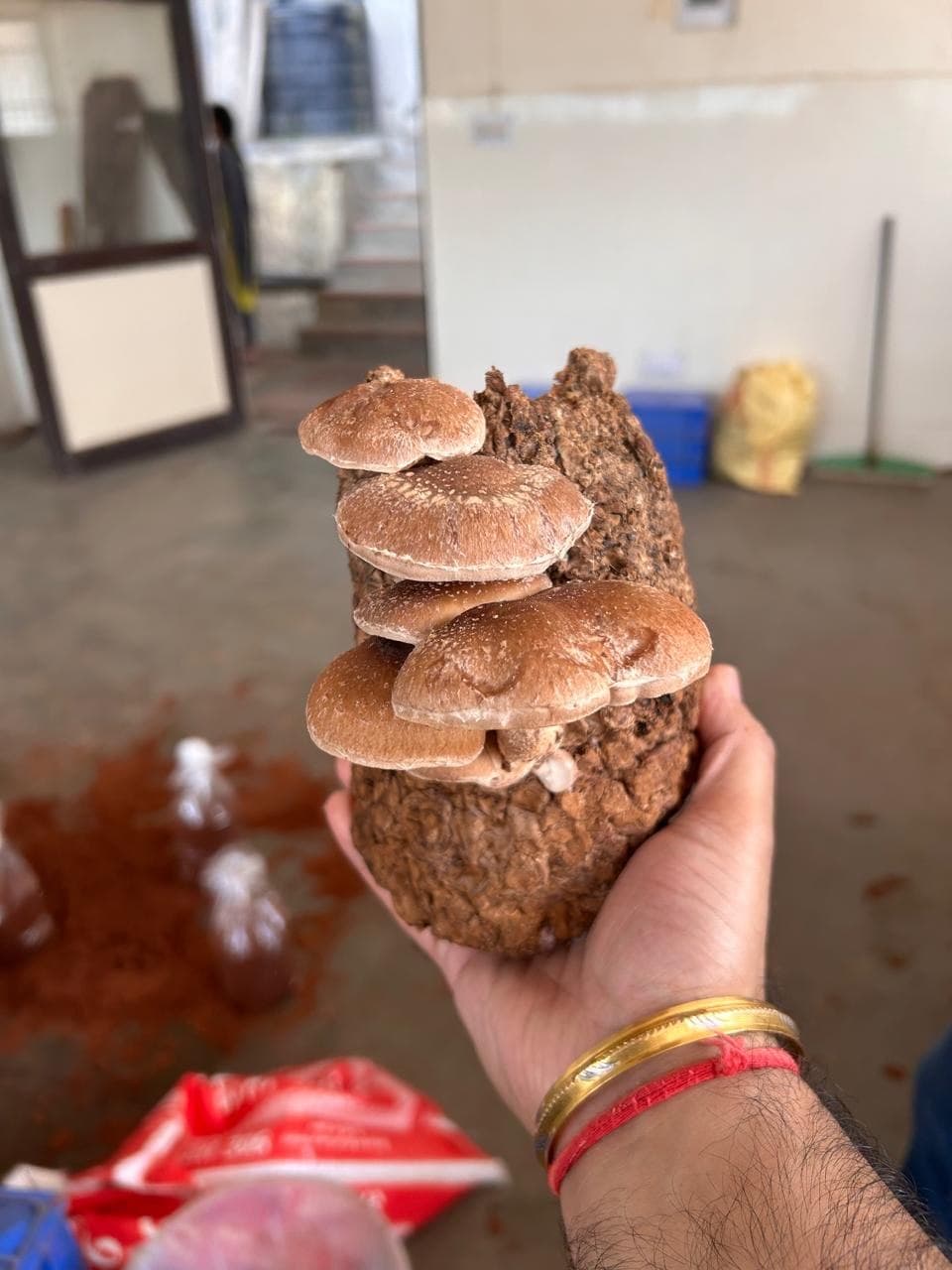
If you've shopped for shiitake in India and then compared it to button or oyster mushroom sitting a shelf away, the price gap is hard to miss. It's not a random markup or an "imported and therefore premium" story, even though import does play a role. The gap comes from real differences in how the mushroom is grown, how long it takes, and what substrate it needs, and once you see those factors laid out, the price makes a lot more sense.
It starts with the substrate, not the mushroom itself
Button mushroom grows on compost: a mix of wheat straw, a nitrogen source like poultry manure, and gypsum, composted over several weeks under controlled conditions before it's even ready for spawning. Oyster mushroom is even less demanding: chopped straw, a hot-water pasteurisation step, and you're underway, using agricultural waste most rural growers already have on hand at negligible cost.
Shiitake is a different proposition. Traditionally, it's cultivated on hardwood logs (oak, in its native Japan, which is where the name "shii" comes from), a method that ties up a log for months to years per fruiting cycle. Modern commercial cultivation has largely moved to sawdust-and-bran substrate blocks instead, which shortens the cycle considerably, but even sawdust cultivation needs specific hardwood sawdust (not any sawdust), a defined bran supplementation ratio, and a much longer, more carefully managed incubation period than oyster or button substrate prep. That incubation period alone (often stretching to months before the block is ready to fruit) ties up growing space and labour for far longer than an oyster mushroom bag, which can be fruiting within three to four weeks of spawning.
Longer tie-up time on infrastructure and labour is, in almost any agricultural product, a direct driver of higher unit cost. Shiitake simply asks more of a grower's calendar than button or oyster does, for every batch.
Climate control is a real cost, not a preference
Shiitake also has a narrower temperature comfort zone than India's dominant tropical and sub-tropical mushroom species. Oyster and milky mushroom were specifically flagged in ICAR-DMR training as better suited to India's actual climate: tropical and sub-tropical species that don't need the cold-room infrastructure temperate mushrooms often require. Shiitake sits closer to that temperate category, which means many Indian growing setups need supplementary cooling or careful seasonal timing to get consistent fruiting, rather than relying on ambient conditions the way an oyster mushroom grower in the plains often can for most of the year.
Cold-room infrastructure, backup power for that infrastructure, and the tighter monitoring a temperature-sensitive crop demands all add fixed costs that a grower has to recover somewhere, and that somewhere is the price per kilo.
Domestic cultivation is still catching up to demand
Shiitake is a newer commercial crop for Indian mushroom cultivation compared to button, which has decades of established compost-based infrastructure across the country, or oyster, which spread fast through FPO and self-help-group programmes precisely because it's cheap to start. Shiitake cultivation expertise, tested strains suited to Indian conditions, and sawdust-block supply chains are comparatively less widespread, meaning a larger share of what's available in the market either comes from a smaller pool of specialised domestic growers or crosses a border to get here. Either route adds cost that a locally superabundant crop like button mushroom simply doesn't carry.
As domestic shiitake cultivation expertise matures (and it is maturing, with more growers experimenting with sawdust-block methods each year), this piece of the price gap should narrow. It hasn't fully closed yet.
Fresh versus dried: a different economics problem entirely
Fresh mushrooms of any species are punishing to hold onto. They run close to 90% water, have no protective cuticle the way a fruit or root vegetable does, and respire fast enough post-harvest that quality drops within days even under refrigeration. That perishability is universal across culinary mushrooms, but it interacts differently with a slower-growing, less widely cultivated species like shiitake: a spoiled batch of shiitake represents a much larger sunk cost in growing time than a spoiled batch of oyster mushroom, which makes fresh shiitake logistics riskier and, in turn, pricier to move through a supply chain reliably.
Dried shiitake sidesteps most of that risk. Removing the moisture extends shelf life from days to many months and concentrates both flavour and nutrition per gram, which is exactly why dried shiitake, rather than fresh, dominates the umami-ingredient side of the category, in Indian kitchens and internationally. A dried shiitake cap rehydrated for about fifteen minutes in warm water gives back most of the texture and nearly all of the umami of the fresh mushroom, without the narrow window in which it has to be used.
This is also, honestly, one reason the dried format tends to look expensive per-gram at first glance: you're paying per gram of a concentrated product, not a 90%-water one. Gram for gram, dried shiitake delivers meaningfully more usable flavour and nutrient density than the fresh equivalent, which is worth weighing against the sticker price rather than comparing dried-to-fresh prices directly.
For context, not as a market-wide claim, our own dried shiitake runs ₹399 for 100g; that reflects the cost structure above: a slower-growing, more climate-sensitive species, properly dried and packed, sold in a format built for a long shelf life rather than a three-day one. Other sellers will price differently depending on their own sourcing and scale, but the underlying cost drivers don't change much across the market.
Vitamin D adds a genuine, if narrow, premium angle
One factual detail worth knowing if you're deciding between shiitake and a cheaper species: shiitake mushroom nutrition includes a meaningfully higher vitamin D2 potential than most cultivated mushrooms, particularly when dried caps get some sun exposure during processing. Button mushroom has some natural vitamin D2 too, but shiitake's is generally rated higher. It's not a reason on its own to justify the full price gap, but it is a real nutritional difference, not just a flavour or texture one: worth factoring in if vitamin D is part of why you're buying mushroom in the first place.
So is shiitake "worth" the premium?
That depends entirely on what you're cooking. If a recipe calls for a mild, absorbent mushroom (a creamy pasta sauce, a simple sabzi), button or oyster does the job for less money and less complexity, and there's no real culinary reason to pay a shiitake premium for it. If you're building a broth, a ramen base, a mushroom gravy where umami depth is the entire point, shiitake's flavour intensity does something button and oyster genuinely can't replicate; a small quantity goes a long way, which partially offsets the higher per-gram price in actual cooking use.
Our own view, reflected across the mushroom guide, is that shiitake is worth keeping as a pantry staple in dried form specifically for the dishes where umami is the point, rather than swapping it in everywhere button or oyster would do just as well. That's the most practical way to think about the price: not "is shiitake overpriced," but "is this the dish where shiitake's specific strengths are actually being used." Browse the full range, including dried shiitake alongside oyster and button, on the shop page and decide dish by dish.