Why Your Mushrooms Go Slimy, and How to Stop It
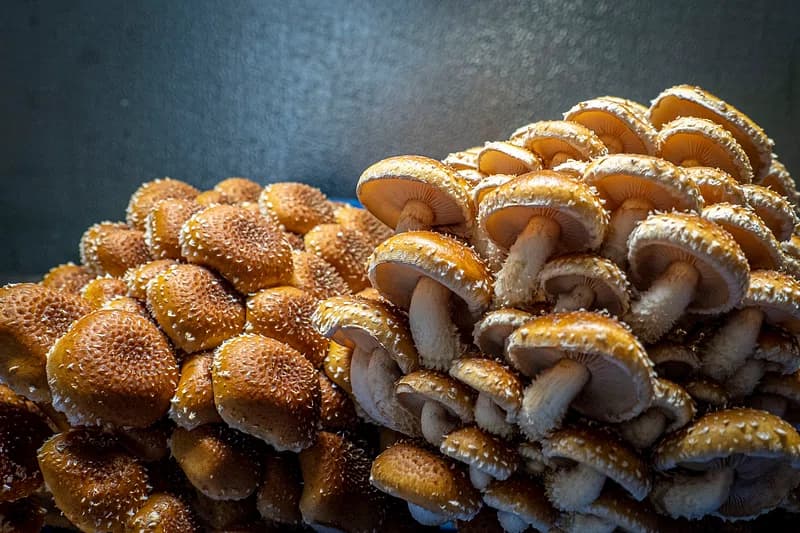
If you've bought fresh mushrooms, forgotten about them for three days, and opened the fridge to find a slimy, browning mess, you've probably concluded mushrooms just spoil fast. That's true, but it's worth understanding why, because the reason has a direct, practical fix, and it's the same reason we lean so heavily on dried and value-added mushroom products in the first place.
Why mushrooms are unusually perishable
Fresh mushrooms carry a specific combination of properties that make them one of the most perishable fresh foods you'll buy, more so than most vegetables:
High moisture content. Mushrooms run close to 90% water. That's more water-dense than most vegetables people compare them to, and it means there's simply more moisture available for microbial growth from day one.
No protective cuticle. A tomato or an apple has a waxy skin that acts as a physical barrier against moisture loss and microbial entry. Mushrooms have no equivalent structure. The cap surface is delicate and offers essentially no protection once harvested.
High respiration rate. Post-harvest, mushrooms continue respiring (consuming oxygen, releasing carbon dioxide and heat) at a notably higher rate than most produce. This is metabolically expensive and speeds up the breakdown of the mushroom's own tissue, which is part of why a mushroom left at room temperature degrades so much faster than a similarly stored carrot.
Put those three together and you get a food that's genuinely difficult to keep fresh for more than a few days without proper handling, which is exactly why post-harvest management is treated as its own serious discipline in mushroom science training, not an afterthought.
The harvest-stage mistake that's already made before you buy
Shelf life is partly decided before the mushroom ever reaches a shop. Mushrooms harvested at the correct maturity stage (not under-mature, not over-mature) keep noticeably longer than mushrooms picked too late, when the cap has already started to open and spores are actively releasing. This is true across species: paddy straw mushroom is specifically harvested at the "egg" stage, before the cap even breaks open, precisely because post-opening quality drops fast. As a buyer, you can't control this directly, but it's worth knowing that a mushroom with a still-closed or barely-opened cap and firm, unblemished surface has more shelf life ahead of it than one with a fully flat, open cap and visible gills.
The washing mistake almost everyone makes
Here's the one that surprises most people: washing mushrooms before storing them is one of the more reliable ways to shorten their shelf life. It sounds counterintuitive (surely clean is safer?) but the added surface moisture from washing accelerates the same spoilage mechanisms already working against a high-moisture, cuticle-free food. Commercial post-harvest guidance is explicit that washing is generally not recommended before storage; if cleaning is genuinely necessary, a very dilute potassium metabisulphite rinse (around 5g per 10 litres of water) is the food-safety-grade approach used commercially, not a home kitchen technique. For home use, the simplest fix is to wipe visible soil off with a dry or barely damp cloth and wash only right before cooking, never before storage: the full step-by-step is on our how to clean and cook mushroom page.
Storage temperature, properly
If you're storing fresh mushrooms at home, refrigeration at standard fridge temperature (roughly 0-4°C) is correct for most culinary species: button, oyster, shiitake, milky. Paddy straw mushroom is the exception: it's more sensitive to chilling injury and is better stored slightly warmer, around 10-12°C, which for most home fridges means the door shelf or a less cold zone rather than the back of the main compartment. Across all species, keeping humidity moderate but not wet (a paper bag or a loosely closed container rather than a sealed plastic bag that traps condensation) helps meaningfully.
Why we lean on drying instead of fighting the clock
Given all of the above, it should be obvious why so much of the mushroom product category (including most of what we sell) is dried rather than fresh. Drying mushrooms removes the moisture that drives spoilage in the first place, extends shelf life from days to many months, and concentrates flavour and nutrition per gram in the process. A dried shiitake cap rehydrated in warm water for fifteen minutes gives you back most of the texture and nearly all of the umami of the fresh version, with none of the three-day shelf-life clock ticking.
This is also, practically, why we recommend home cooks buy fresh mushrooms only for near-immediate use (plan to cook within a day or two of purchase) and keep dried mushrooms and mushroom powder as the pantry staple for everything else. It's not a sales pitch dressed as advice; it's the actual practical conclusion of the post-harvest science, and it's the same conclusion that led commercial mushroom processing toward dried and value-added formats in the first place.
A quick reference
For anyone who wants the short version to stick on a fridge: buy mushrooms with closed or barely-open caps, don't wash before storing, refrigerate at 0-4°C (10-12°C for paddy straw specifically), use within a day or two, and keep dried mushroom or mushroom powder on hand for everything that isn't a same-week meal. It's a small set of habits, but it's the difference between mushrooms that make it to your plate and mushrooms that make it to the bin.
Cooking mushrooms: why heat and timing matter more than most vegetables
Once you've gotten a mushroom home in good condition, how you cook it affects both texture and, to a lesser extent, digestibility. Mushrooms have rigid cell walls made largely of chitin, the same structural compound found in insect exoskeletons and crustacean shells, which is part of why raw mushroom can feel tough or be harder to digest than cooked mushroom for some people. Heat breaks down that cell wall structure, which is why virtually all traditional and commercial mushroom preparation, in Indian cooking and elsewhere, involves cooking rather than eating raw. This isn't a safety requirement for cultivated species the way it might be implied to be: it's a texture and digestibility preference that's become near-universal in practice.
Species also cook differently, which matters if you're used to treating "mushroom" as one ingredient. Enoki, thin and delicate, turns rubbery within seconds of overcooking and is traditionally added last to soups and hot pots for exactly that reason. Milky mushroom, by contrast, is notably heat-tolerant and holds its firm texture even through long cooking, which is part of why it works well in slow-cooked curries where a delicate mushroom would disintegrate. Shiitake's stem, often discarded by home cooks as too tough to eat whole, is usually diced fine and added to stocks rather than wasted, a small habit that meaningfully reduces kitchen waste if you're cooking with shiitake regularly.
A five-point checklist worth keeping
To bring this together into something actually usable: buy mushrooms with firm, closed or barely-open caps and no visible sliminess; skip washing until the moment before you cook; refrigerate promptly at 0-4°C for most species (10-12°C for paddy straw); use fresh mushrooms within one to two days rather than treating them like a hardy pantry vegetable; and keep dried mushroom or mushroom powder in the pantry for the gap between fresh-mushroom shopping trips. None of this is complicated, but it's the difference between mushrooms that make it to a good meal and mushrooms that make it to the compost bin, and it's advice we give as readily to a home cook as to the growers and processors we consult with on the commercial side of post-harvest handling. For the species-by-species detail on how each one cooks and stores, the mushroom guide has the full breakdown, and our mushroom recipes put all of this into practice.